Skip to content
The AI Research Digest is included with Super Saver. See Super Saver
Tech AI Magazine Research
Digest
Latest Issue

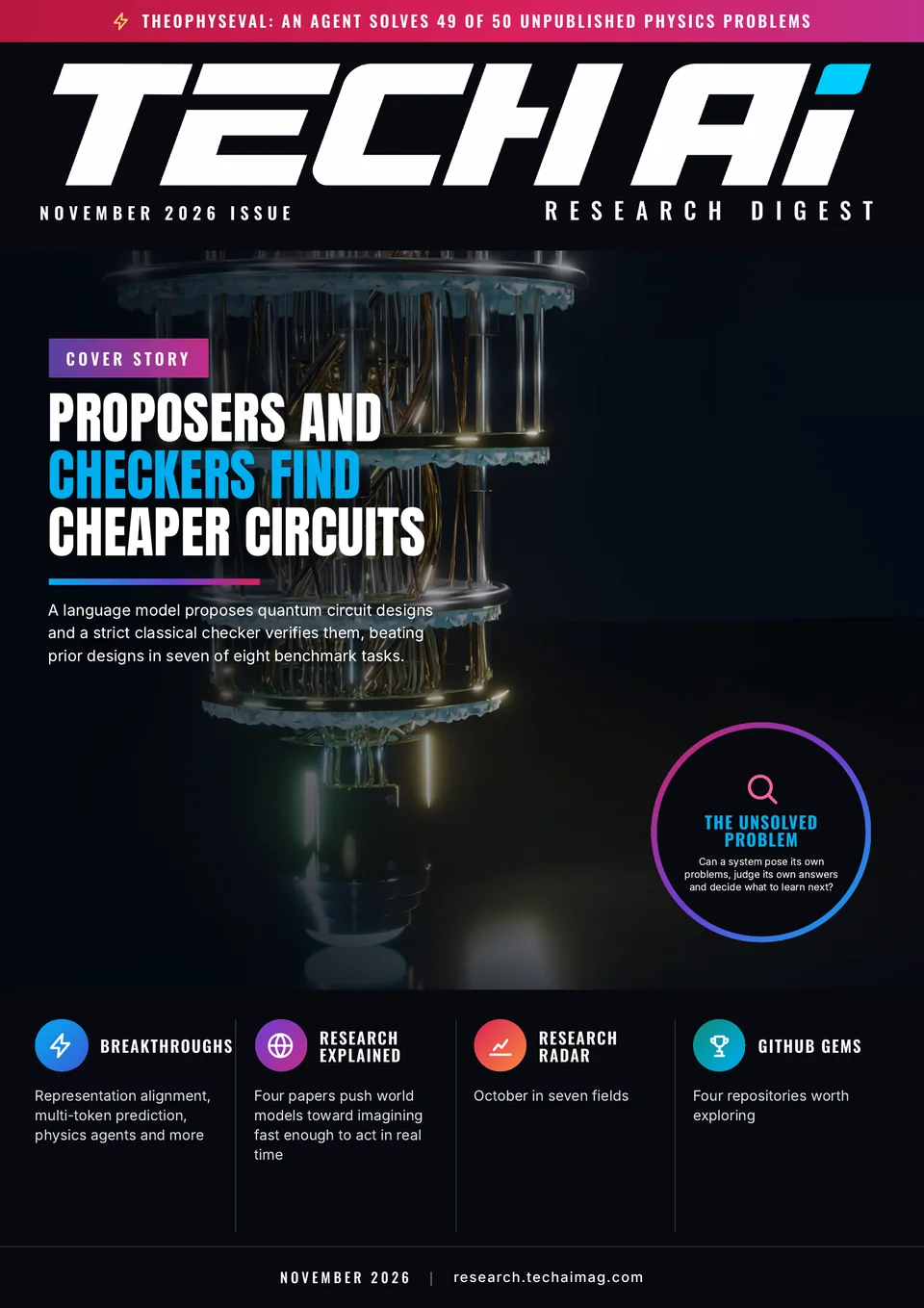
November 2026 Issue

The newest issue of the AI Research Digest: October 2026's AI research, every paper, ranking and repository, in one magazine.

Inside this issue
  • Cover StoryLLM-guided search finds cheaper quantum circuits in seven of eight benchmark tasks
  • Top 5Five research breakthroughs of October
  • ExplainedWorld models are learning to imagine fast enough to act in real time
  • RadarOctober in seven fields
November 2026 Issue cover New Issue
Paper of the Month

The one paper to understand this month

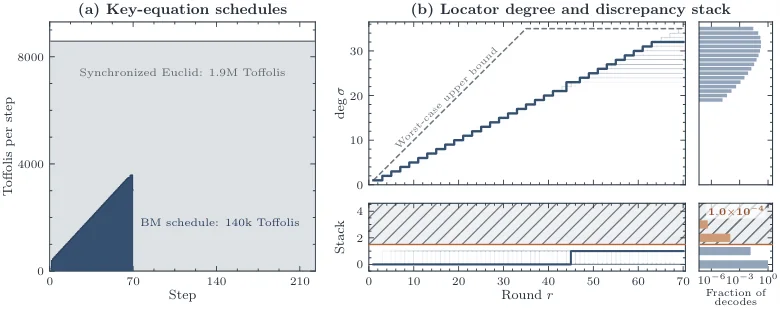
Figure S1: The Reed–Solomon decoder. (a) Measured forward Toffoli cost per step: one cycle of the 222-cycle synchronized EEA baseline of Khattar et al. [13] , or one round of our 70-round BM decoder. (b) Locator degree (top) and number of stored discrepancies…
Large language models

LLM-guided search finds cheaper quantum circuits in seven of eight benchmark tasks

A language model proposes circuit designs, a strict classical checker verifies and scores them, and the results beat prior designs while making a previously impractical classical algorithm usable in quantum form.

Quantum algorithms spend much of their budget on ordinary calculations, such as arithmetic and decoding, that must be rebuilt as reversible circuits. A new paper pairs a large language model, which writes circuit-building programs, with an independent evaluator that checks correctness and counts Toffoli gates and qubits. Across eight tasks in chemistry, optimization, simulation, numerical computation and number theory, the discovered circuits used both fewer Toffolis and fewer qubits than the prior state of the art in seven. In the eighth, the search produced a new reversible design for modular inversion based on divsteps, a classical method previously considered impractical in this setting.
Read the full story Includes Explain it Like I'm 12
Five Research Breakthroughs

What moved the field in October

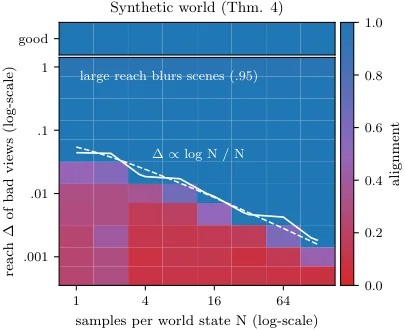
Positives that join less of a scene need more data ( Section 2.3 ). A synthetic world of five classes of six states (literal data, as in Figure 12 ): alignment of a text JEPA with the image side against the samples per state and the reach of its bad views…Breakthrough 1 · AI safety

A theorem for the Platonic Representation Hypothesis points to positive pairs, not scale

Balestriero and LeCun prove when separately trained JEPAs learn matching representations, then show a 109M-parameter text model aligning with vision better than a 72B language model.

Randall Balestriero, Yann LeCun4 min+ ELI12
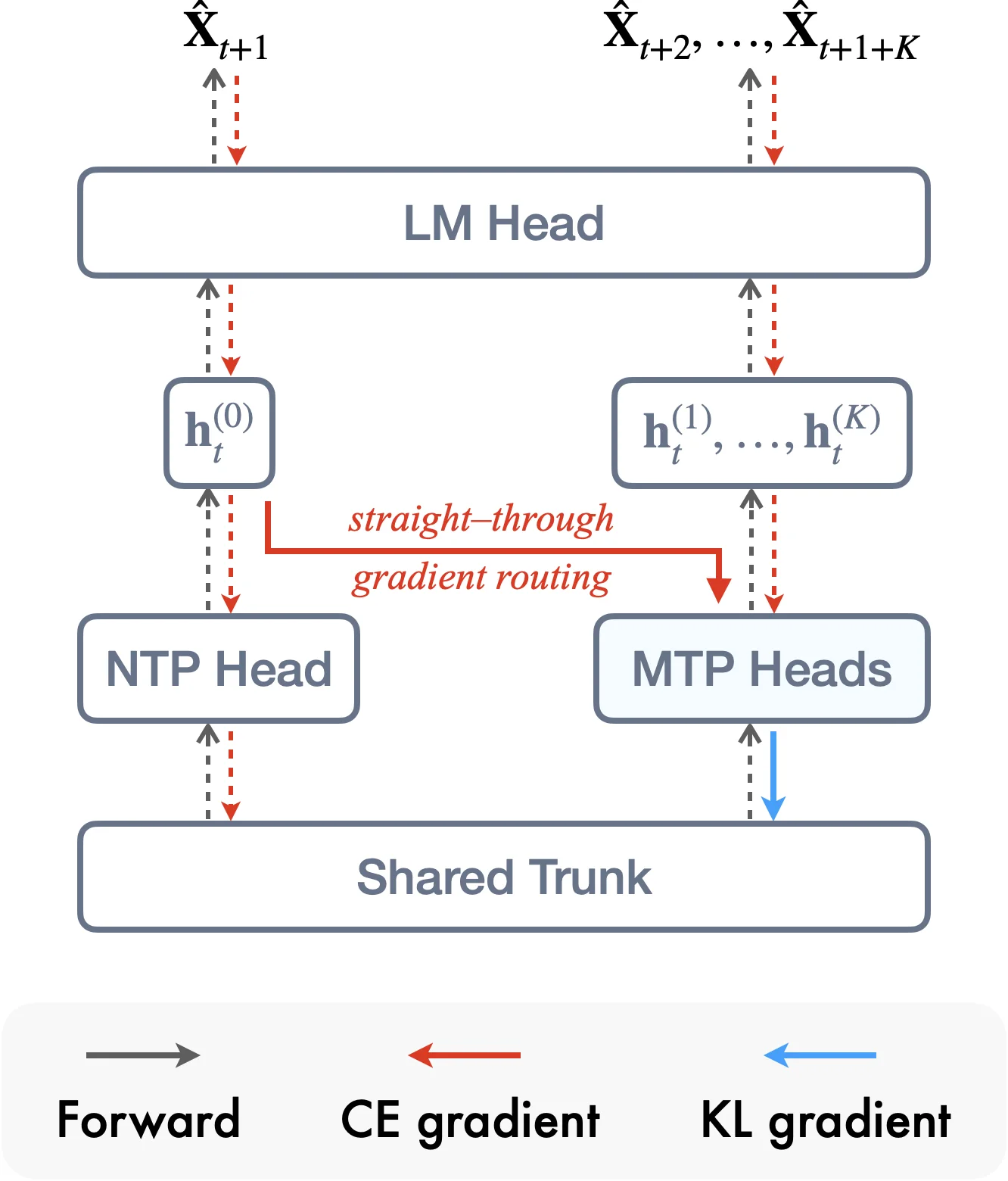
Soft-MTP’s illustration, pseudocode, and loss performance compared to MTP. Blue line is the one-line code change . We refer readers to Algorithm 1 for the full code implementation of Soft-MTP, including the MTP loss weighting.Breakthrough 2 · ML systems

Soft-MTP: a one-line change strips noise out of multi-token prediction training

A new preprint finds that the standard way of training multi-token prediction heads hides a noisy gradient term. Removing it improved perplexity, speculative decoding and reasoning at no measurable extra cost.

Jayden Teoh4 min+ ELI12
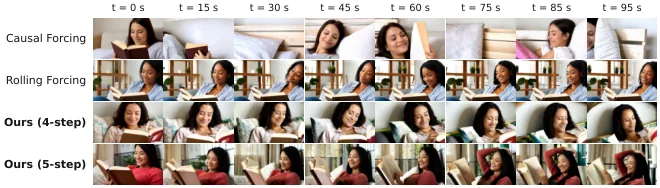
Qualitative comparison. Rows show Causal Forcing, Rolling Forcing, and 4-step and 5-step Wave Forcing.Breakthrough 3 · Computer vision

Wave Forcing overlaps denoising stages to stream video faster, with more motion

By letting each video chunk see only earlier, cleaner chunks, a new method pipelines generation across GPUs. It matches a strong baseline on quality and shows much more motion.

Yijie Jin, Yuxuan Liu et al.4 min+ ELI12
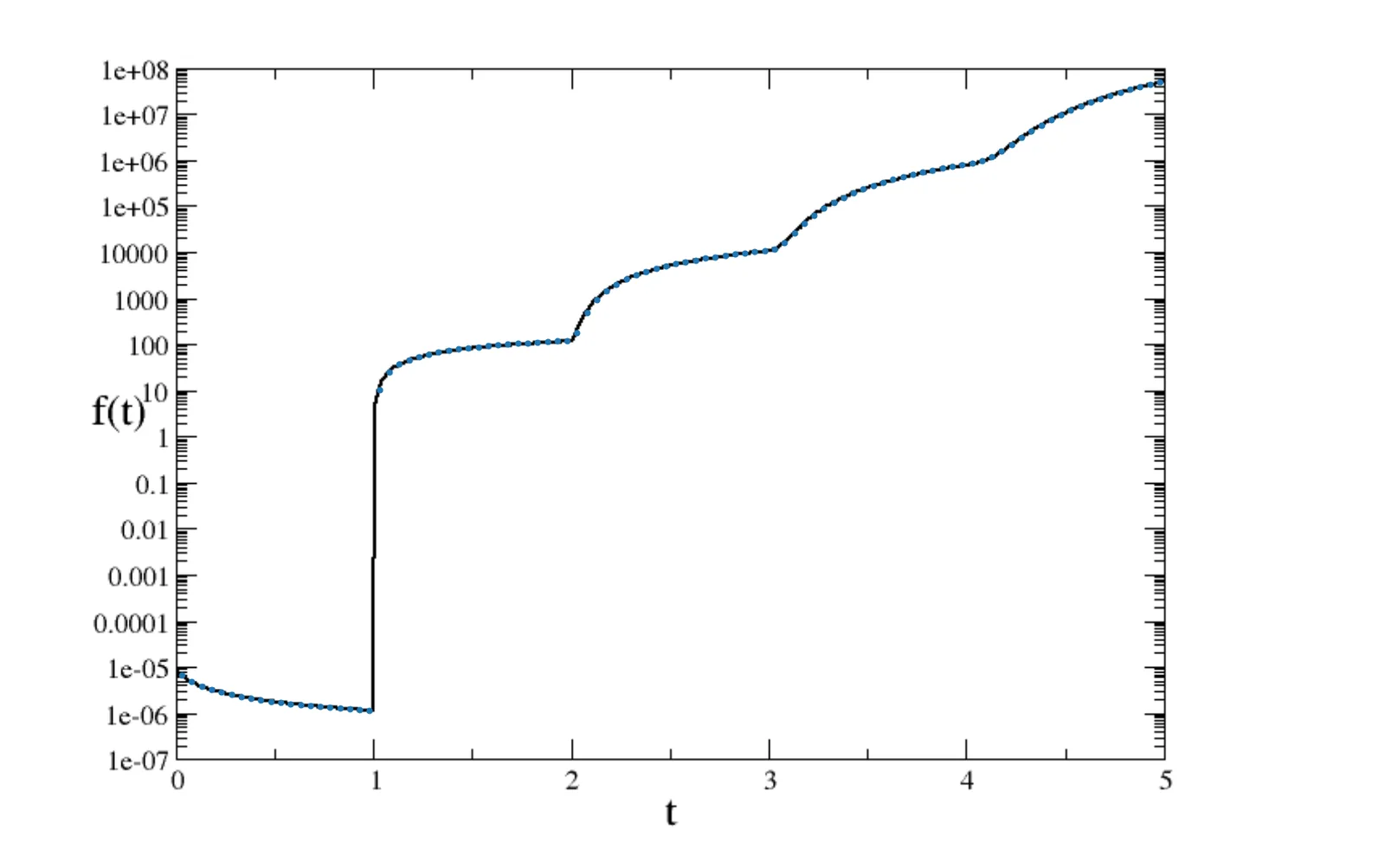
Numerical solution of the differential equation.Breakthrough 4 · AI agents

Best AI agent solves 49 of 50 unpublished theoretical physics research problems

TheoPhysEval tests whether off-the-shelf agents can finish research-level physics calculations with no hints. The best one nearly sweeps it. The authors explain why that is not the same as doing research.

3 min+ ELI12
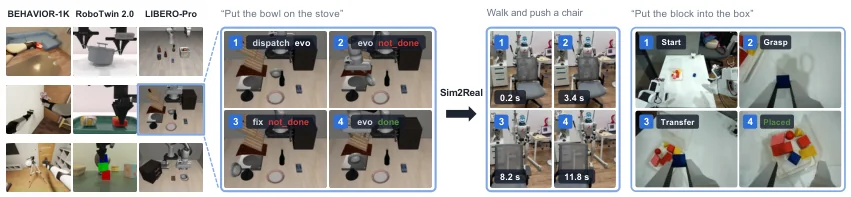
REA across embodiments. Left: episodes in BEHAVIOR-1K, RoboTwin 2.0 and LIBERO-Pro. Middle: route memory and the judge gate recover from silent failures on a LIBERO-Pro test episode. An Evo–Fix–Evo sequence places the bowl on the stove after the judge rejects…Breakthrough 5 · Robotics

A router that never makes robots wait on the brain lifts success on perturbed tasks

REA lets a slow foundation-model agent and fast robot policies cooperate without blocking, beating the best single method on LIBERO-Pro while using fewer steps and less time.

Pengfei Zhou, Yixing Ma et al.4 min+ ELI12

Understand it.
Then go deeper.

One big idea taught properly, and one hard problem nobody has solved yet. Both come with an Explain it Like I'm 12 version.

The AI Research Radar

October in research

Six of the seven tracked fields grew in arXiv submissions this month, led by AI agents (up 24.3%) and large language models (up 14.9%), while machine learning systems was the only field to decline, down 13.9%. AI agents appeared as a tagged topic in every field, from video generation and robotics to multimodal coding benchmarks.

October 2026Previous monthOpen the full Radar
The full Radar Every field's recurring topics, the month's notes and the papers to read.Open the Radar
Open-Source Project of the Month

Built in the open, worth your time

heygen-com/hyperframes

HyperFrames: write a web page, render it as an MP4, and let coding agents do the writing

HyperFrames is an open-source TypeScript framework, published under HeyGen's GitHub organization. It turns HTML, CSS, media and seekable animations into MP4 videos, and the project describes the output as deterministic. You can use it from a command-line tool, from coding agents such as Claude Code, Codex and Cursor through installable skills, or as the rendering engine behind hosted tools. It ships nine skills and about 450 ready-made blocks. It is Apache-2.0 licensed and needs Node.js 22+ and FFmpeg. Some features depend on HeyGen's Pro plan, and the README excerpt publishes no performance or fidelity figures.

82,948 stars+22,422 this monthTypeScriptApache-2.0
Read the full write-up
GitHub Gems

Repositories developers should explore

Picked for practical use, not star counts.

Rust

max-sixty/worktrunk

A Rust command-line tool that makes Git worktrees as easy to use as branches, built for running several AI coding agents in parallel.

Each agent gets its own working directory, and you address it by branch name: one command creates a worktree and starts Claude in it, and wt remove cleans it up, where plain git needs several commands. It also adds wt list with status, hooks that run commands on events such as creating a worktree, and copy-on-write build caches.

★ 12,405NOASSERTION
Python

google/artemis

A Python tool that turns natural-language instructions into automated tasks on real Android phones and emulators, with an MCP server so AI coding assistants can drive the device.

Mobile and QA engineers can have Antigravity, Claude Code or Windsurf run end-to-end test flows on a connected device and collect Logcat output and screenshots for diagnosis. The README reports 99%+ task completion on Google Research's AndroidWorld benchmark (100+ multi-step tasks) and typically 3 to 5 seconds per step; these are the project's own figures.

★ 11,563Apache-2.0
Go

Gaurav-Gosain/tuios

A Go terminal multiplexer and window manager with tiling panes, workspaces, and a daemon that keeps sessions alive and tracks what the coding agents in each pane are doing.

If you run several coding agents in terminal panes, tuios gathers their state into a single Inbox and lets the agents message each other. Its tmux shim lets tools that drive tmux, such as Claude Code agent teams, run inside it. It also offers vim-like modal keys, BSP tiling, kitty graphics support, and sessions that persist across detach and survive restarts, and its daemon can reach sessions on your other machines.

★ 5,999MIT
Python

earthtojake/text-to-cad

A plugin and set of skills that let AI agents design physical parts and assemblies as Python scripts (build123d and OpenCASCADE) and export them as STEP, STL, 3MF or GLB files.

Beyond modeling, it gives an agent manufacturability checks, CalculiX stress analysis, dimensioned engineering drawings and KiCad circuit boards. It also checks DXF and STEP files against SendCutSend's guide before upload, and slices 3D prints with OrcaSlicer and sends them to Bambu Connect or Bambu Studio. Note that the installer sets itself up in every agent app on your computer, and that usage stats and crash reports are sent by default (without your files, paths or prompts), with an opt-out described in the privacy policy.

★ 25,439MIT
From the labs

Published by the research labs

Super Saver

Read every story in full

Members get the complete articles, every Explain it Like I'm 12 version and the full archive of the AI Research Digest, plus all of Tech AI Magazine.