
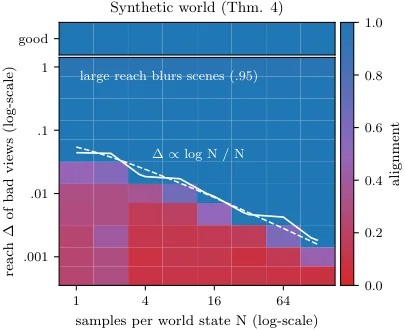
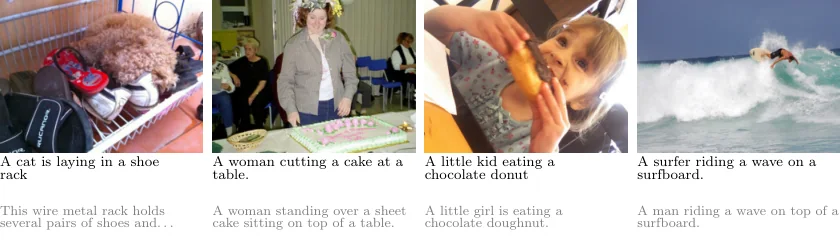
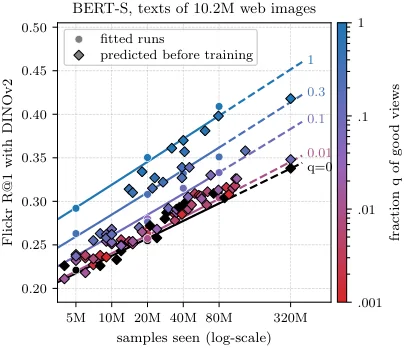
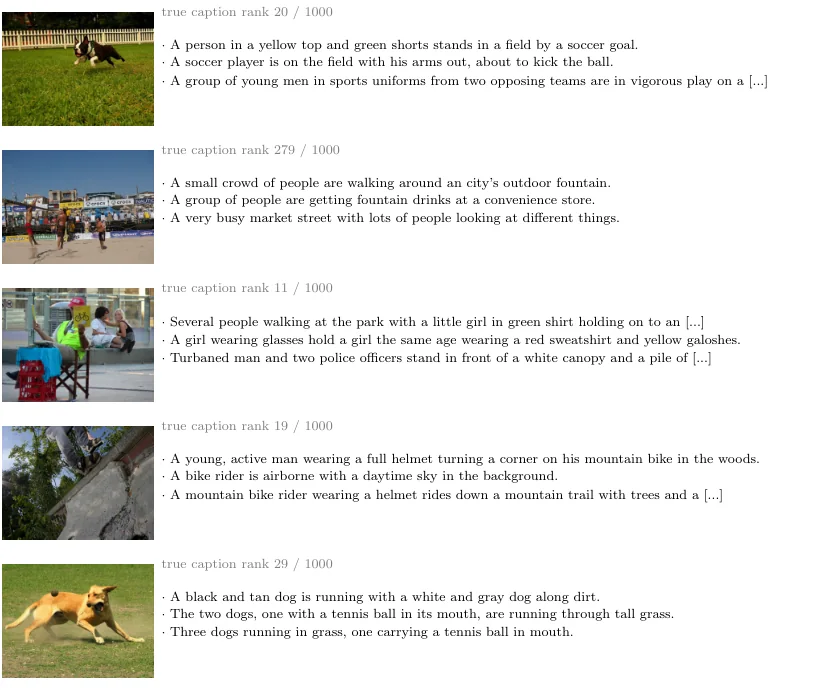
The Platonic Representation Hypothesis holds that vision and language models drift toward a shared picture of the world as they scale. Randall Balestriero and Yann LeCun prove a version of it for joint-embedding predictive architectures (JEPAs). In an idealized setting, encoders trained separately on different modalities learn the same representation up to a rotation, provided their positive pairs link the same world states. In experiments, text JEPAs trained with good views, which pair separate texts describing the same image, align with a vision model better than much larger language models. They also reach a given level of alignment with 42 times fewer samples than next-token prediction.
Research Digest » October 2026 research » Breakthrough 1 of 5
Breakthrough 1 of 5 · October 2026
A theorem for the Platonic Representation Hypothesis points to positive pairs, not scale
Balestriero and LeCun prove when separately trained JEPAs learn matching representations, then show a 109M-parameter text model aligning with vision better than a 72B language model.
AI safety
Super Saver
Keep reading, and get the Explain it Like I'm 12 version
The full article and its Explain it Like I'm 12 version are for Super Saver members. Sign in if you're a member.
Your account doesn't include Super Saver yet. Upgrade to read every issue in full.
Figures from the research
More from October 2026
 Paper of the Month
 Breakthrough 2 of 5
 Breakthrough 3 of 5
Keep exploring this issue
Paper of the MonthLLM-guided search finds cheaper quantum circuits in seven of eight benchmark tasks
A language model proposes circuit designs, a strict classical checker verifies and scores them, and the results beat prior designs while making a previously impractical classical algorithm usable in quantum form.
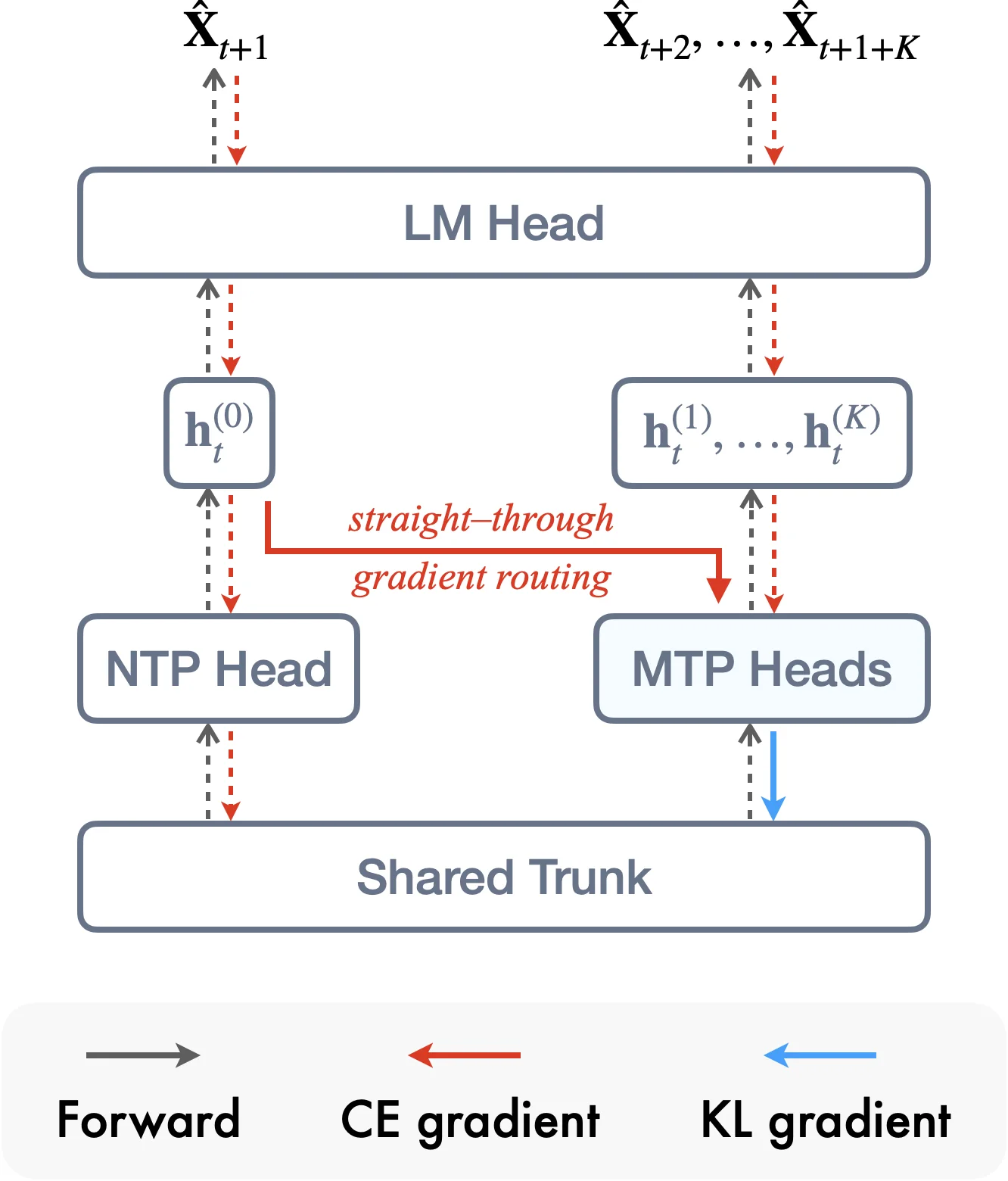
Breakthrough 2 of 5Soft-MTP: a one-line change strips noise out of multi-token prediction training
A new preprint finds that the standard way of training multi-token prediction heads hides a noisy gradient term. Removing it improved perplexity, speculative decoding and reasoning at no measurable extra cost.
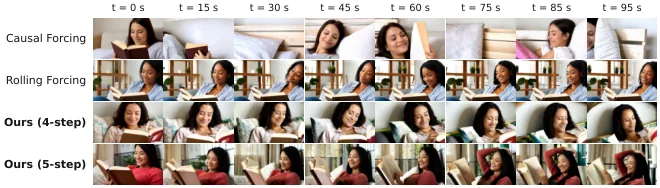
Breakthrough 3 of 5Wave Forcing overlaps denoising stages to stream video faster, with more motion
By letting each video chunk see only earlier, cleaner chunks, a new method pipelines generation across GPUs. It matches a strong baseline on quality and shows much more motion.